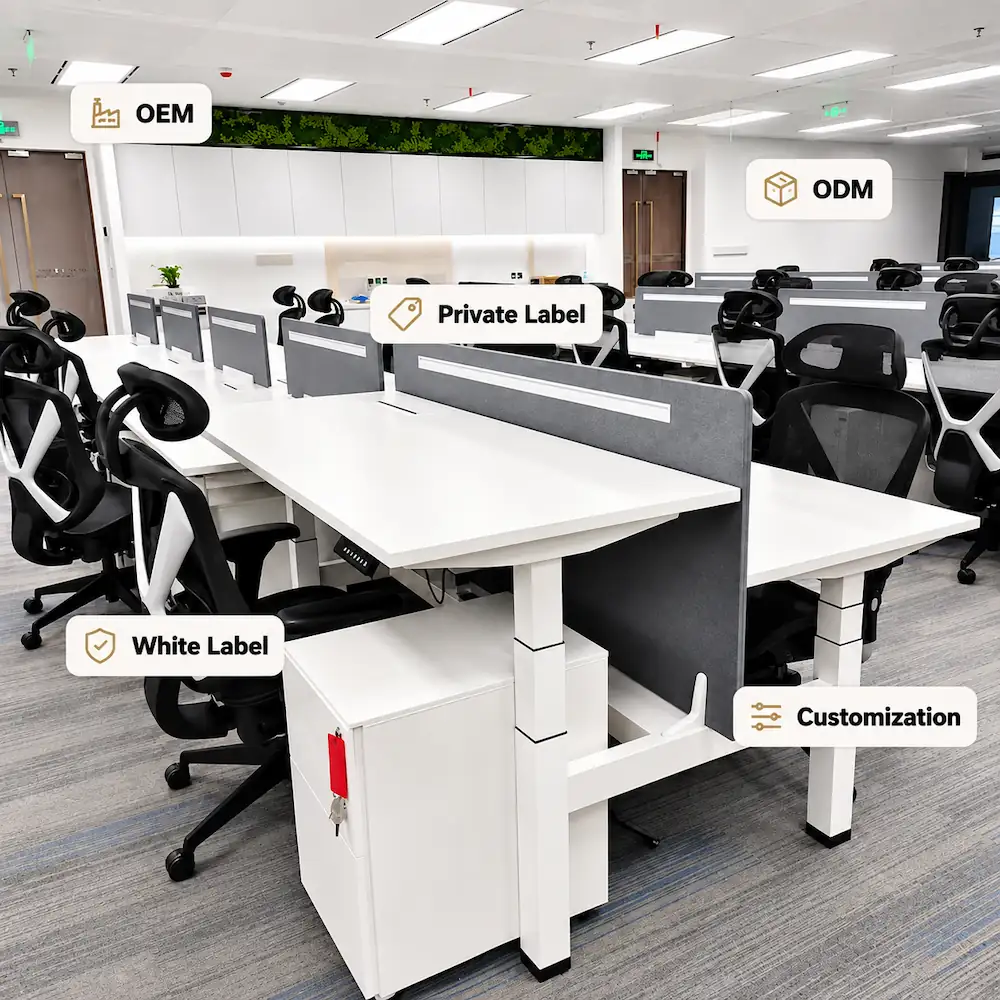
Start with the Requested Change, Not the Label
The terms OEM, ODM, private label, white label and customization are not used consistently across the market. A label alone does not show how much product development is required, whether an existing product can be used as the starting point, or which technical and commercial details must be confirmed.
For an initial assessment, identify the base product or reference design and describe the exact changes required.
How We Use These Terms on This Page
Private Label
An existing product configuration with buyer-specific branding, labels, manuals or packaging.
Existing-Option Customization
A current product platform using available sizes, finishes, controls or accessories.
Buyer-Provided Design
Drawings, specifications or a reference product supplied by the buyer for feasibility checking.
New Development
A request that cannot start from a suitable existing product or available configuration.
The final route depends on the base product and the exact changes—not the label used in the enquiry.
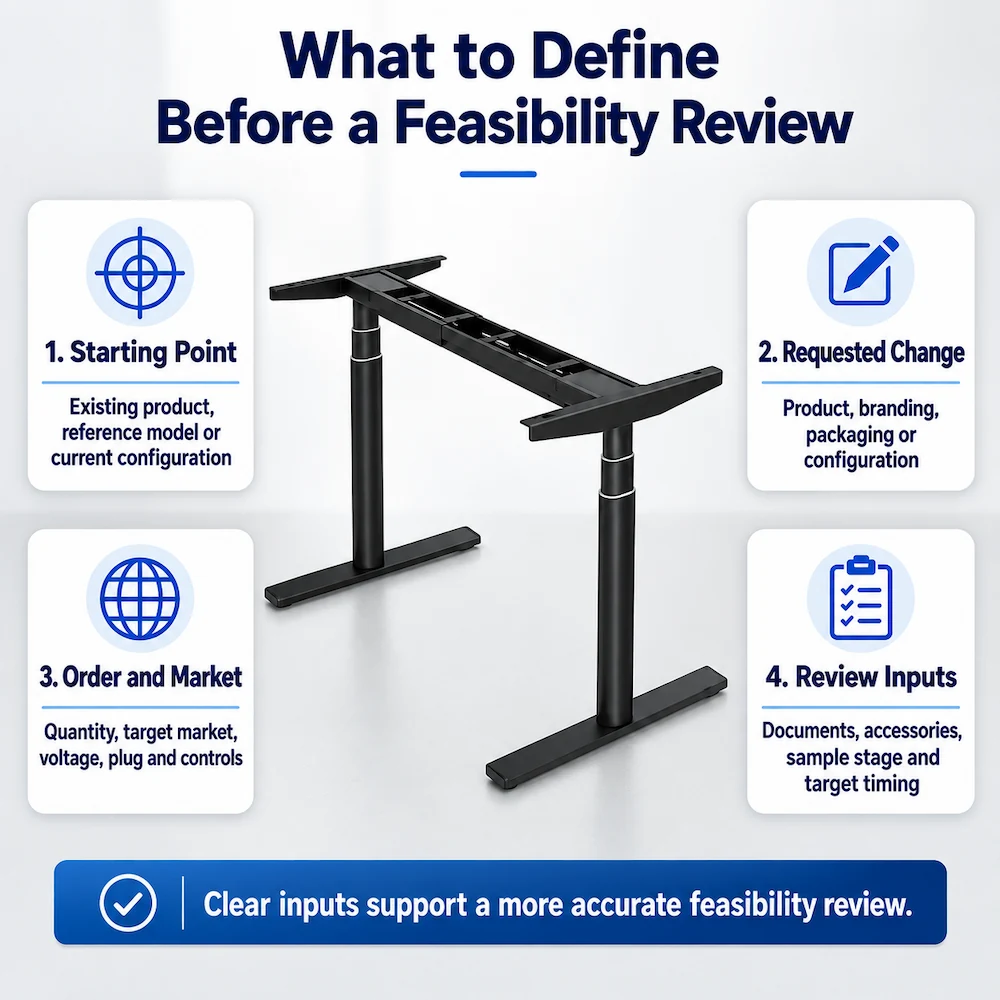
What to Provide Before a Feasibility Review
A generic “OEM standing desk” request is not enough to assess feasibility. Start with a reference product and clearly identify what needs to change.
Input Package Example
• Reference model photo
• Marked-up change list
• Target market
• Plug or controller requirements
• Logo or packaging artwork
• Drawing or reference file
Base Product
Identify the existing product, reference model or current configuration. If none has been selected, provide a clear reference design.
Requested Changes
Mark the product, configuration, branding or packaging changes being considered.
Quantity and Market
Share the expected quantity and the country or market where the product will be sold or used.
Branding, Electrical and Document Needs
Include logo or artwork files, voltage and plug requirements, controller preferences, required reports or documents, the current sample or approval stage, and target timing.
Upload a reference image, drawing or change list.
Classify an OEM or Private-Label Request by the Level of Change
Start with the base product and the exact changes requested. Changes limited to branding or existing options may require a more limited review, while requests involving new components, electrical systems, structural changes, firmware or a new product concept require a more detailed technical assessment.
| Starting point | Typical change | What happens next |
|---|---|---|
| Existing-product review | An existing product or current configuration with no substantial changes | Confirm the exact model and configuration |
| Branding / private-label review | Logo, labels, manuals or packaging changes | Review the branding and packaging requirements |
| Existing-option review | Existing colors, sizes, accessories, handsets or controllers | Check the requested combination of existing options |
| Engineering-change review | New components, electrical systems, interfaces or structural changes | Carry out a more detailed technical assessment |
| New-development enquiry | A new product concept, tooling, molds, firmware or a new structural design | Define the product requirements before feasibility is assessed |
These categories indicate how detailed the review may need to be. They do not confirm that every review category is available or that every requested change can be supported. If the base product or requested change is unclear, more details are needed before the appropriate review category can be identified.
What Different OEM and Private-Label Changes May Affect
Even a change that appears cosmetic may require technical checks or a review of documents and supporting evidence.
The specific part, system or document being changed determines what must be checked next—from compatibility and approvals to packaging and commercial requirements.
Keep the Approved Configuration Consistent
Once a sample or reference configuration has been approved, the same product, component and document details should be clearly identified for bulk production and future repeat orders.
Approved Sample or Reference
Record the approved sample, reference configuration or signed-off product details, where applicable.
Confirmed Specification and BOM
Confirm the drawings, bill of materials, component versions, desktop details, packaging files and other agreed requirements.
Pre-production Check
Before bulk production, check that the planned materials, components and files match the approved configuration.
Packing or Order Record
Keep the relevant inspection, carton-label, packing or shipment records needed to identify the order and supplied configuration.
Repeat-order Revision
For each repeat order, confirm whether the previous configuration remains unchanged or whether any product, component, document or packaging detail has been revised.
An approved sample is an important reference, but it does not replace the confirmed specification, BOM, configuration details or order-specific checks.
Why Evidence Must Be Rechecked for a Modified Product and Target Market
An existing report, certificate, declaration, listing or model registration does not automatically cover a newly branded private-label product or a modified configuration. Its applicability must be confirmed for the exact brand, product configuration and target market.
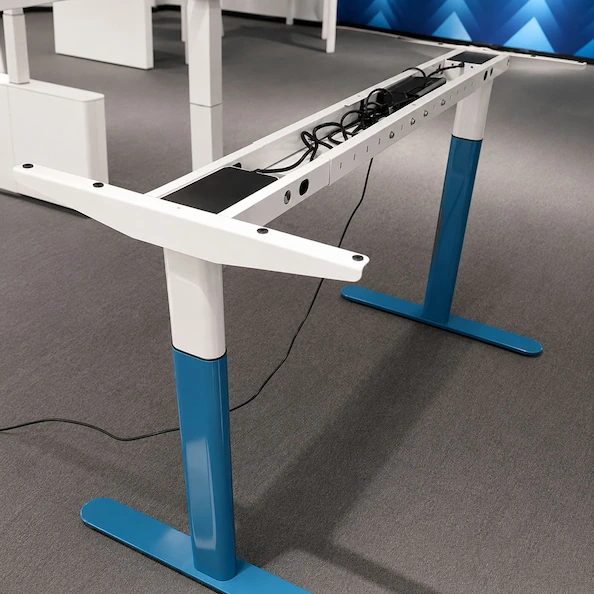
What Affects MOQ, Timing and Delivery Before a Quotation
MOQ and timing are not determined by the labels OEM or private label alone.
Base Product and Extent of Change
The current product or configuration and how far the request departs from it determine the review needed.
Quantity, Market and Supply Requirements
Order quantity, target market, and minimum requirements from material, component or packaging suppliers can affect MOQ and quotation preparation.
Branding, Samples and Pending Reviews
Changes to logos, labels, manuals or packaging may require updated artwork, translations or documents, as well as packaging approval. Sample rounds, technical questions, whether reports or documents still apply, and target-market requirements can also affect timing.
Production and Delivery Conditions
Material availability, packaging or shipping requirements, production capacity, order timing and the buyer’s target date also influence delivery planning.
MOQ, timing and delivery can be confirmed only after the product, requested changes, quantity and review requirements are clear.
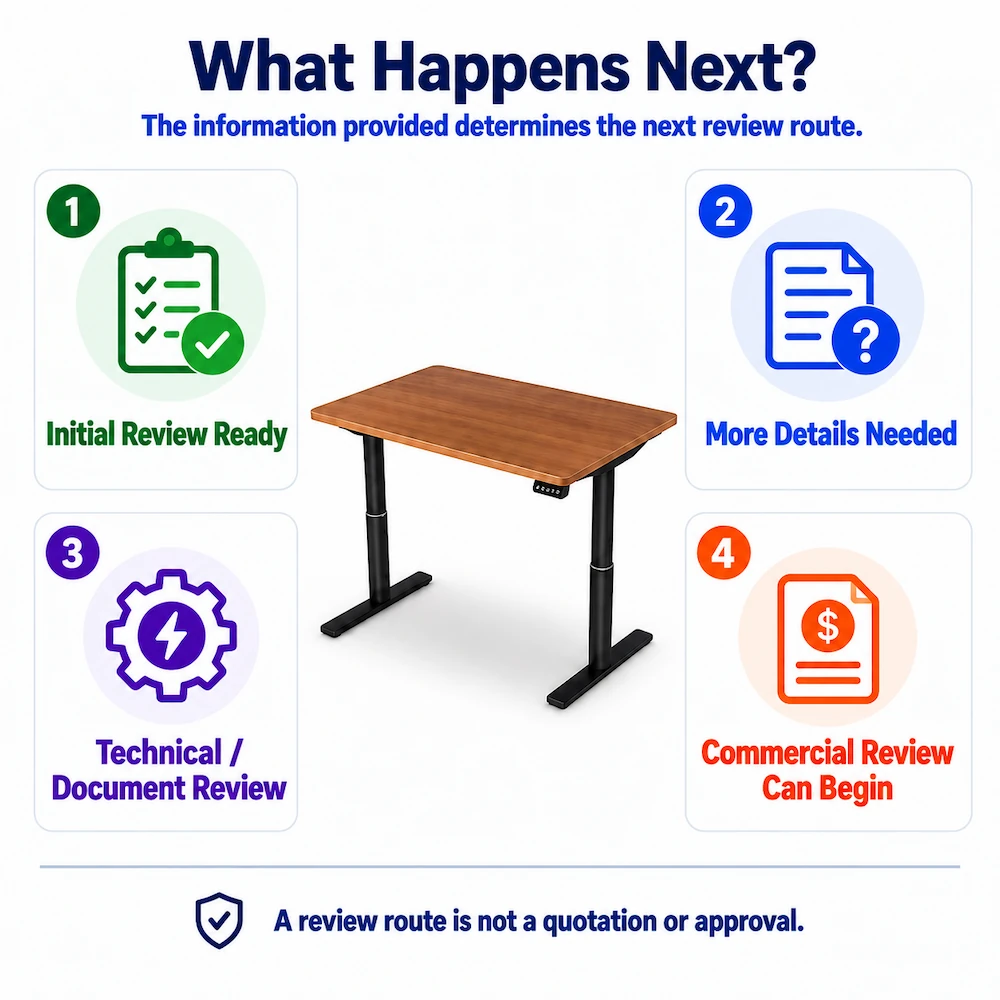
What Happens Next Based on the Information Provided
Use the base product or reference model, requested changes, quantity, target market and main requirements to determine who should review the request next.