
Fixed-Height vs Height-Adjustable Desk Frames
The key difference is that fixed-height desk frames maintain a set working height during everyday use, while height-adjustable desk frames raise or lower the worksurface within their designed adjustment range to accommodate different working-height requirements.
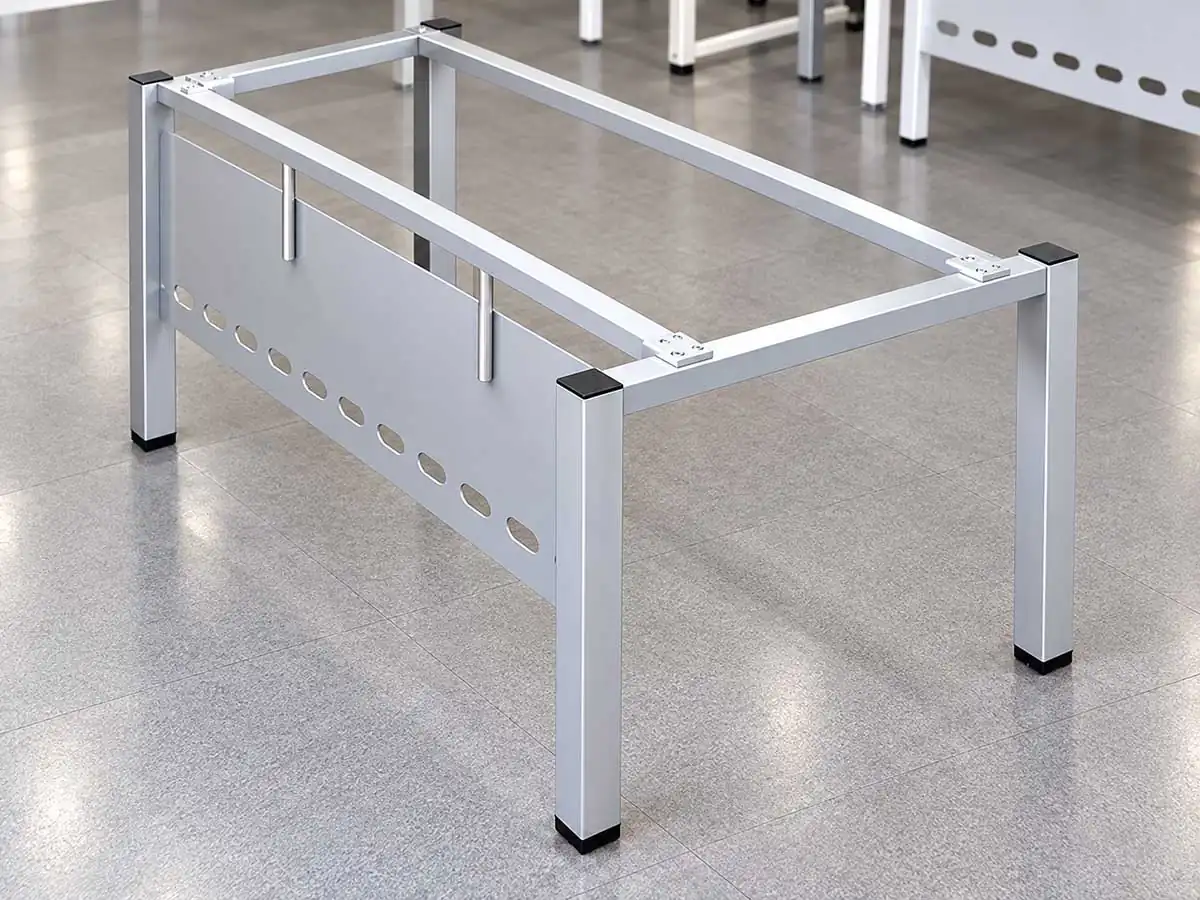
Fixed-Height Desk Frames
A fixed-height desk frame supports the worksurface at a set working height. It is not designed to raise or lower the worksurface during everyday use as a sit-stand desk frame does.
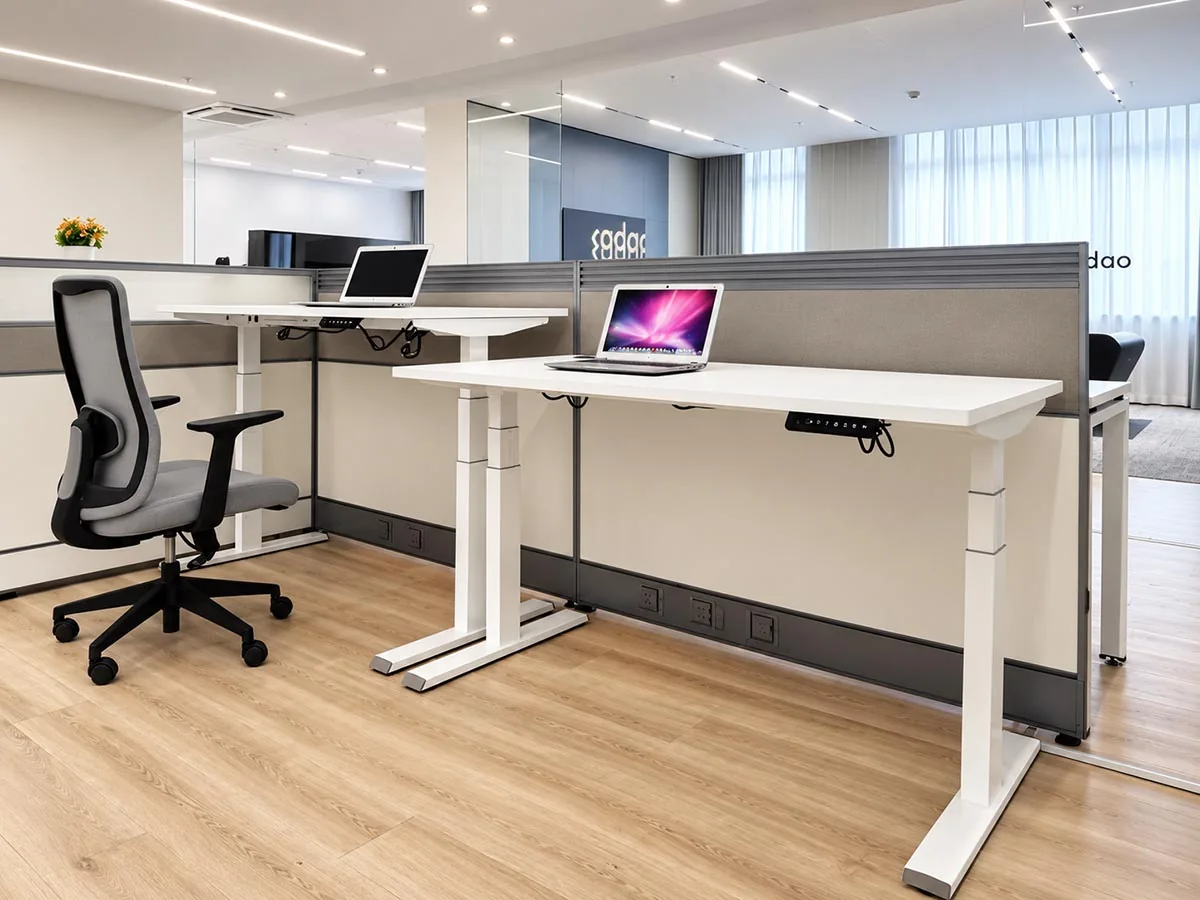
Height-Adjustable Desk Frames
Height-adjustable desk frames, also known as sit-stand desk frames, allow users to raise or lower the worksurface as needed to adjust their working height and move between sitting and standing.
Which frame type should you consider?
If the worksurface does not need to change height during use, start with fixed-height frames. If users need to move between sitting and standing, review height-adjustable frames. Final selection depends on the project layout, configuration, and budget.
Floor Leveling vs Working-Height Adjustment
Both fixed-height and height-adjustable desk frames offer adjustment, but for different purposes.
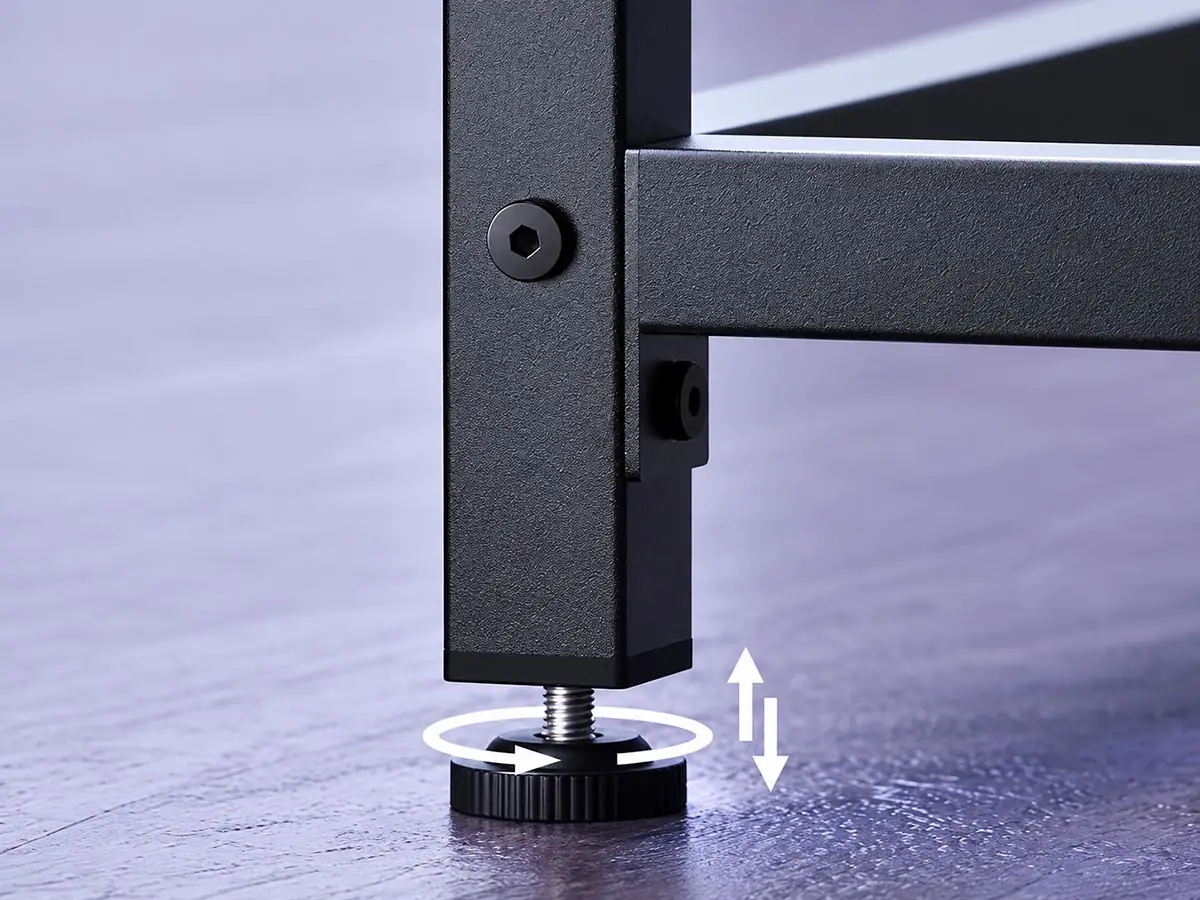
Fixed-Height Desk Frames: Floor Leveling
Our fixed-height desk frames have adjustable leveling feet with a 0–15 mm adjustment range. During installation, the feet can be adjusted to accommodate differences in floor level and maintain proper contact between the frame and the floor.
This adjustment compensates for uneven floors during installation. It is not intended to raise or lower the worksurface during everyday use.
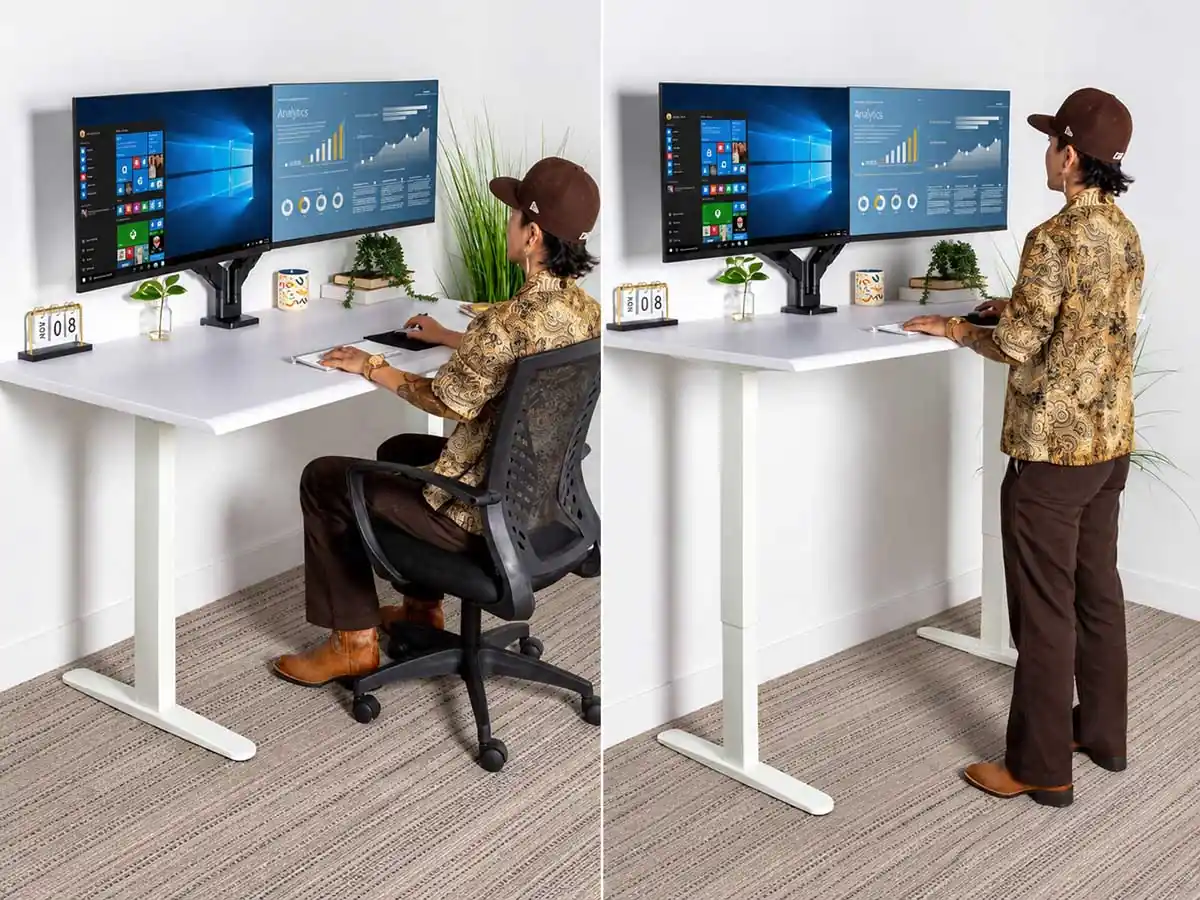
Height-Adjustable Desk Frames: Working-Height Adjustment
Height-adjustable desk frames allow users to raise or lower the worksurface to adjust their working height and move between sitting and standing.
How Will the Desk Be Used?
Both fixed-height and height-adjustable desk frames are primarily used in office environments. The choice depends on the project requirements, how the desks will be used, and the project budget.
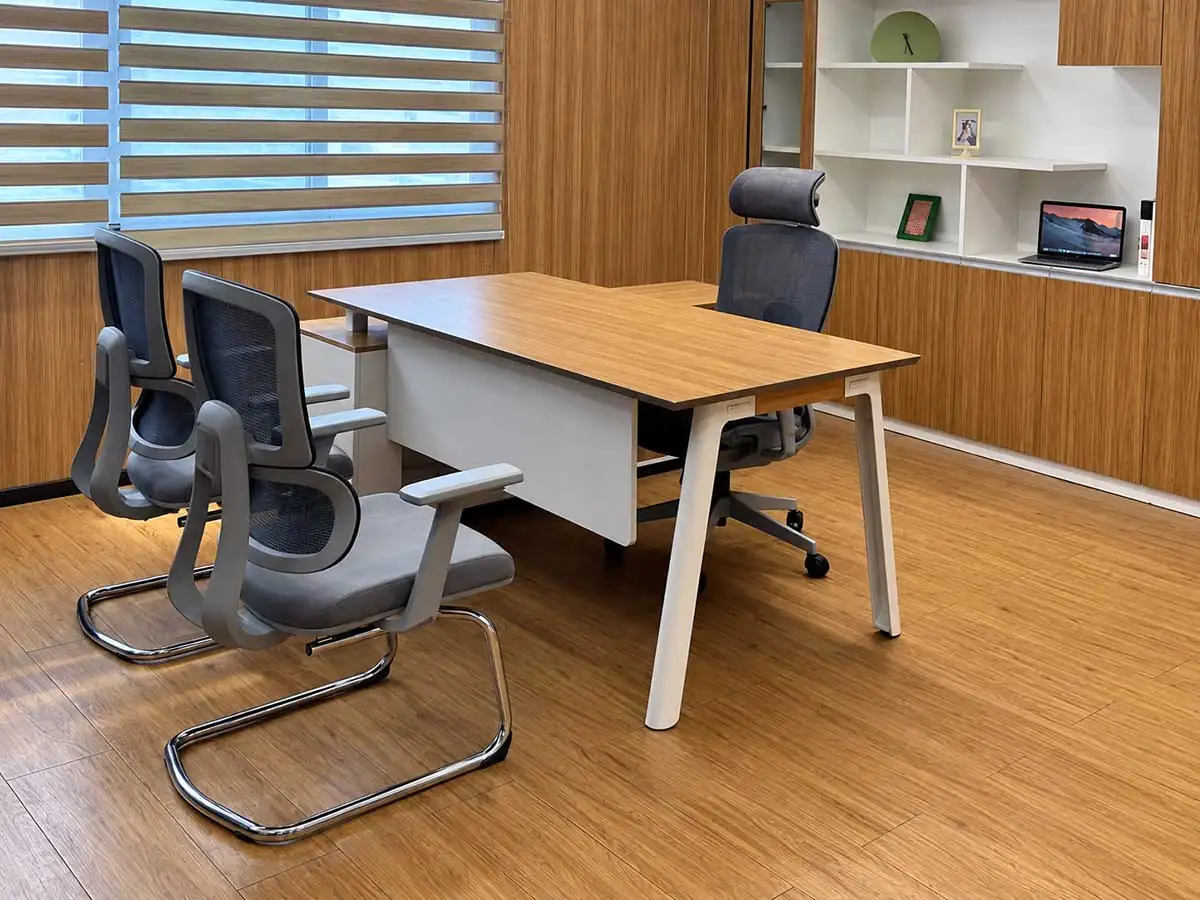
Individual Desks
Consider who will use the desk, whether it will be shared, and whether users need to adjust the working height during everyday use. Whether they need to move between sitting and standing is another important consideration when selecting a desk frame.
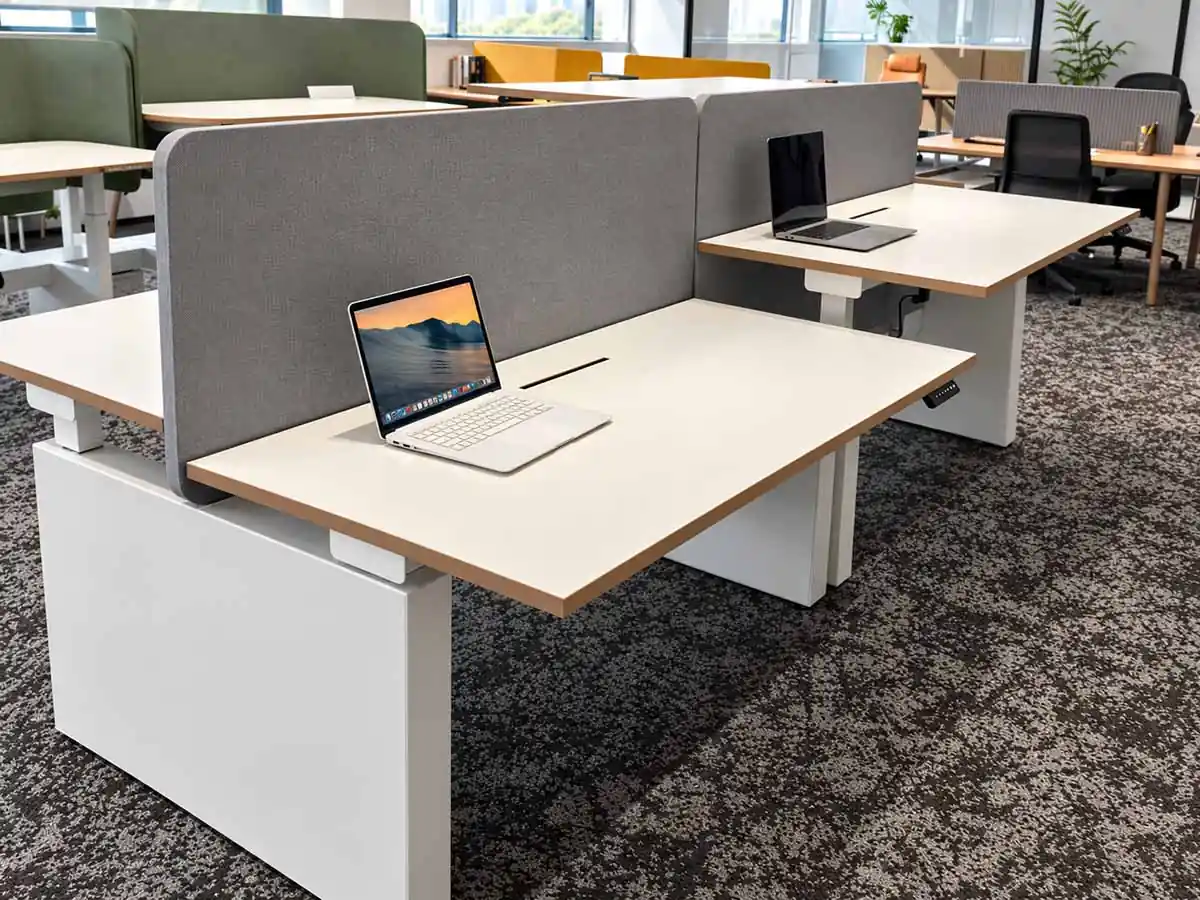
Team Workstations
When planning the overall workstation layout, consider each user’s working-height requirements. Height-adjustable frames are an option for workstations where users need to move between sitting and standing during the workday. Fixed-height frames are an option where working-height adjustment is not required.
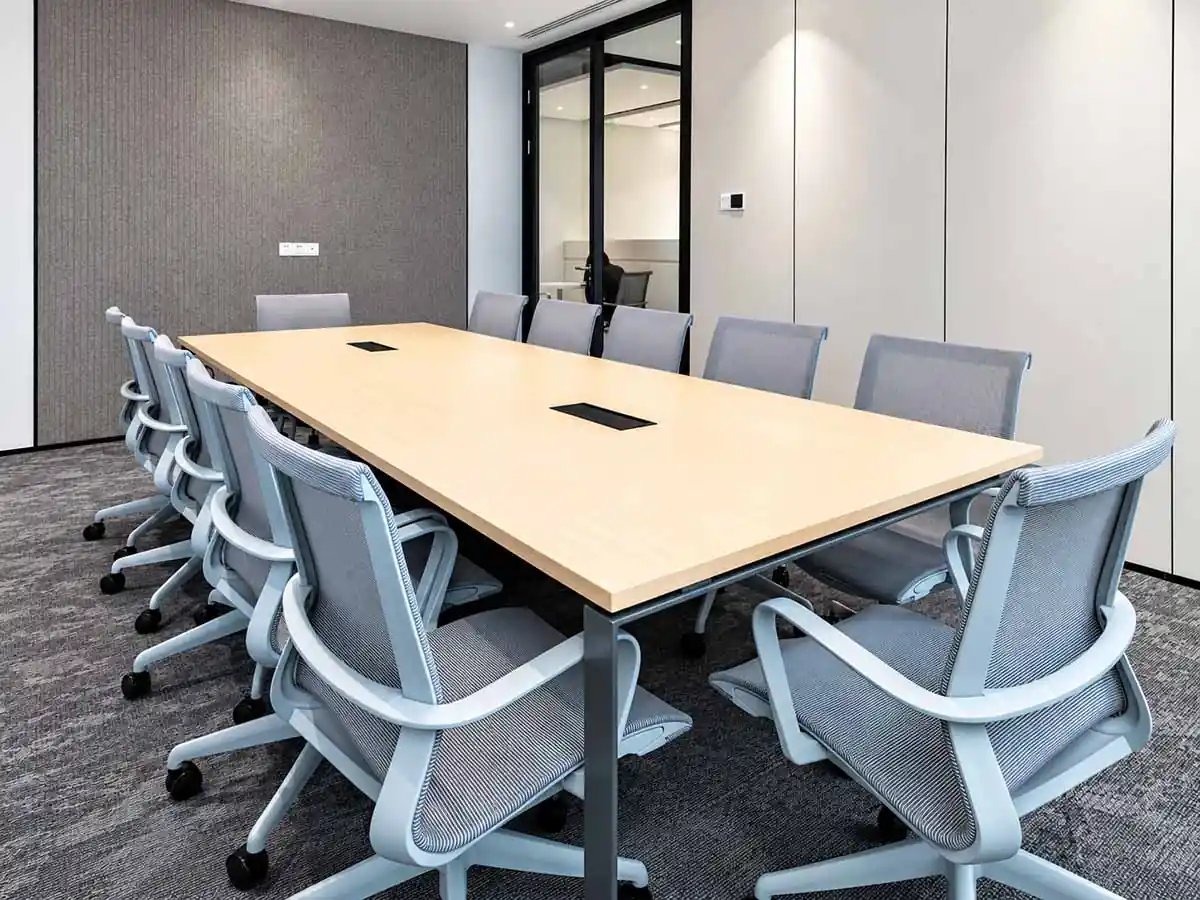
Meeting and Conference Tables
Consider whether the table will be used mainly for seated meetings, standing discussions, or both, and whether the worksurface height needs to change between these activities.
What Should You Compare Before Choosing a Desk Frame?
When choosing between fixed-height and height-adjustable desk frames, compare working-height requirements, user needs, layout and configuration, and project budget. Evaluate these factors together against your project’s specific requirements.
| Project Consideration | Fixed-Height Desk Frames | Height-Adjustable Desk Frames |
|---|---|---|
| Working-Height | Set working height Suitable for office applications where the worksurface can remain at a set height during use. | Adjustable working height Suitable for office applications where the worksurface needs to be raised or lowered during use. |
| Users & Activities | Everyday use at a fixed height Check whether a fixed working height meets users’ everyday office needs. | Sitting and standing needs Check whether users need to adjust working height, including moving between sitting and standing. |
| Layout & Configuration | Frame and support requirements Check that worksurface dimensions, workstation layout, frame configuration, and support requirements meet the project’s needs. | Configuration and movement clearance In addition to worksurface dimensions, workstation layout, and frame configuration, consider the space needed for height adjustment and clearance from adjacent furniture. |
| Budget & Scope | Frame and component cost Review quotations and costs against the required frame configuration, quantities, specifications, and component list. | Height-adjustable system costs Review quotations and costs against the required height-adjustable system, configuration, quantities, specifications, and component list. |
Compare quotations for both frame types against the same project requirements. Confirm which products, components, configurations, and functions each proposal includes. A lower price does not necessarily cover the same product configuration or functions.
Three Product Lines for Different Applications
Onmuse currently offers three separate product lines: fixed-height desk frames and table bases, height-adjustable desk frames, and training table frames. Each serves different office and project application needs.
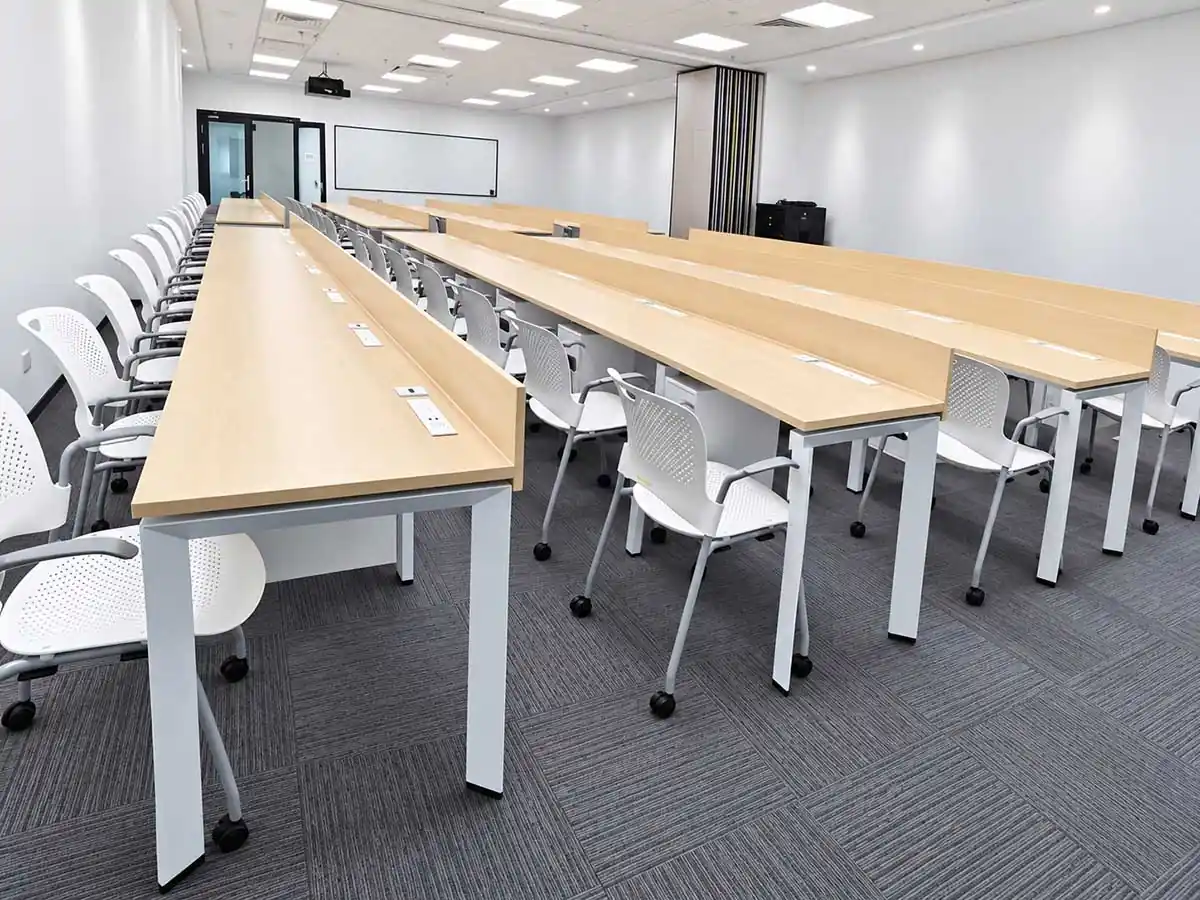
Fixed-Height Desk Frames and Table Bases
This product line currently includes 62 active models, grouped by their main material and construction, including steel, aluminum, and die-cast frames.
The range covers individual desks, team workstations, and meeting tables. Sizes and colors can be customized to meet project requirements. We can also manufacture frames to customer-supplied drawings, subject to technical review and confirmation of manufacturing feasibility.
Height-Adjustable Desk Frames
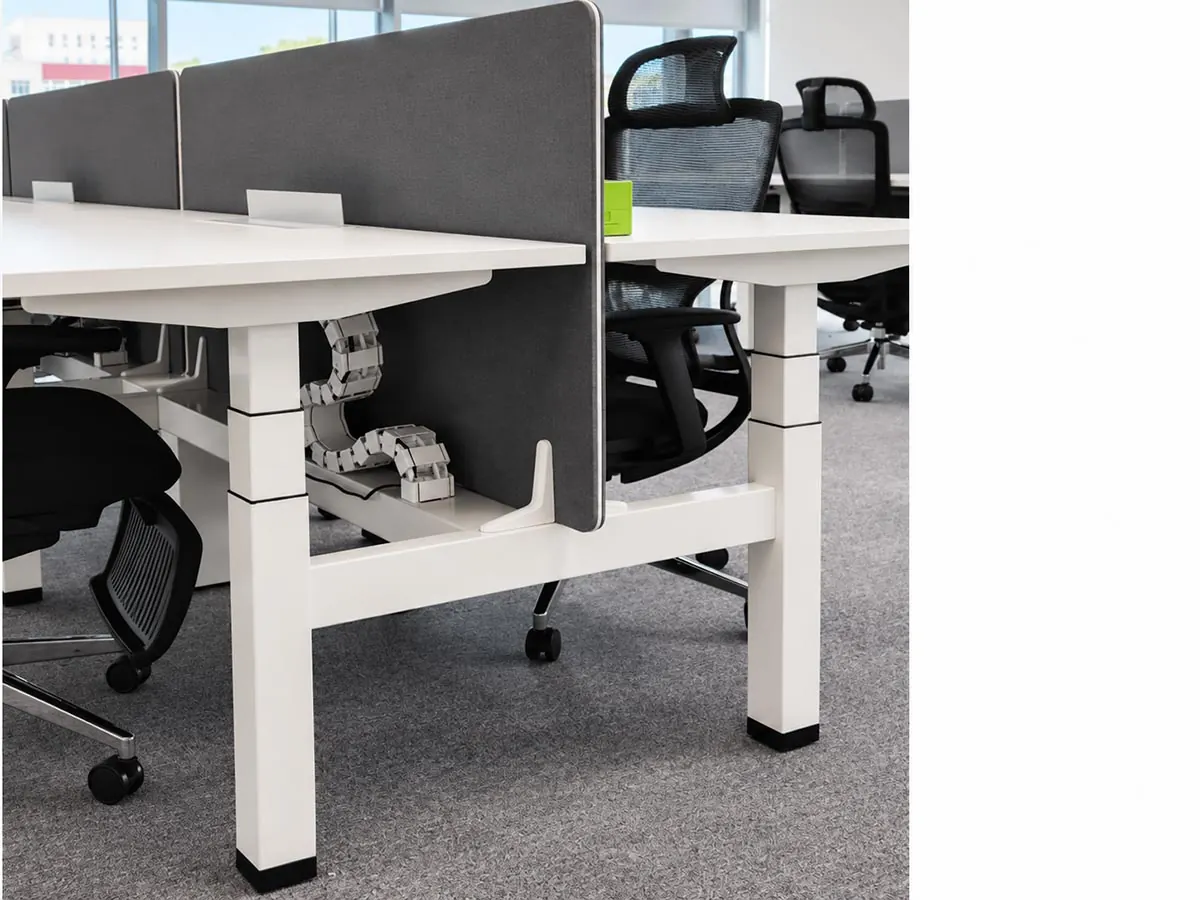
The separate Height Adjustable Tables product line currently includes 10 product series, primarily for office applications that require working-height adjustment.
The range includes two-stage and three-stage lifting columns, with rectangular, round, and oval profiles. These frames raise or lower the worksurface within their designed height-adjustment range, allowing users to move between sitting and standing.
Training Table Frames
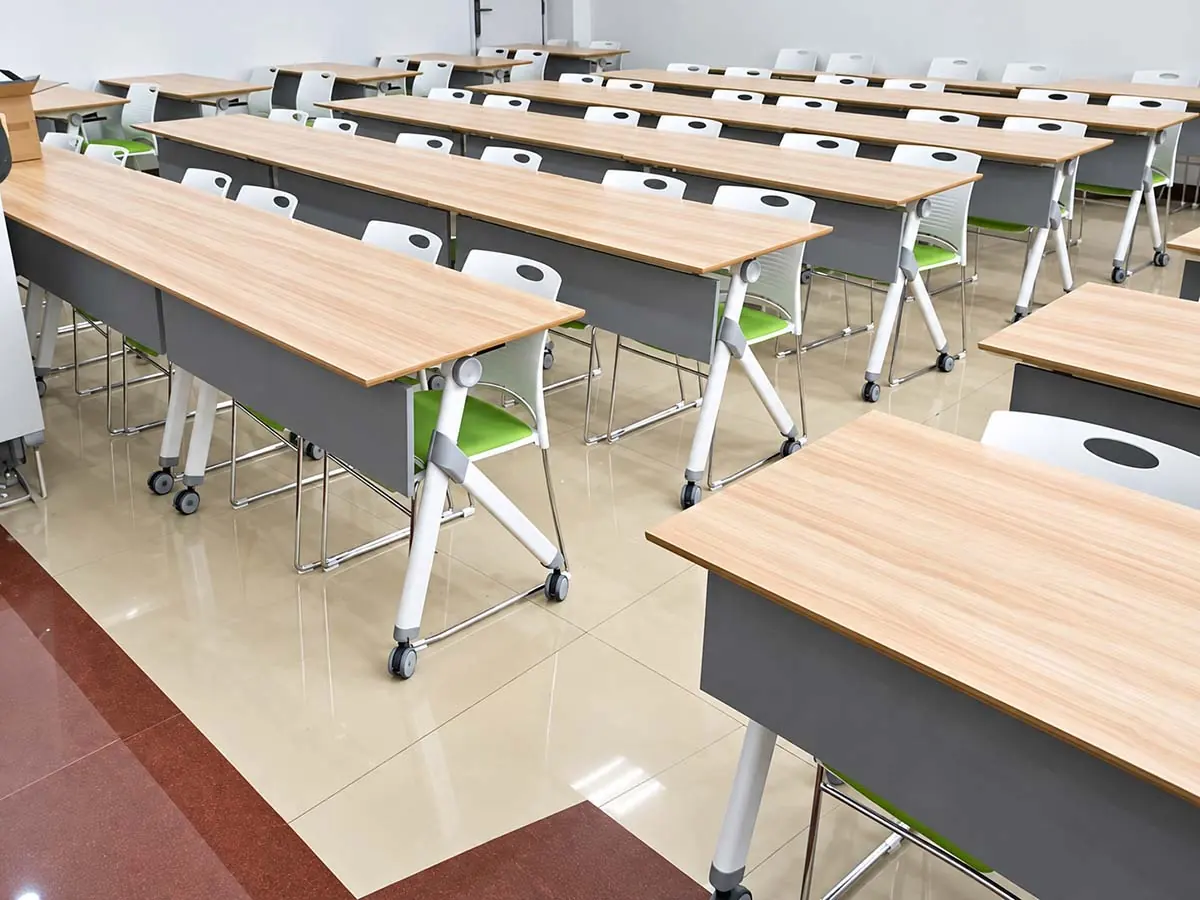
This product line currently includes 32 product series, primarily for schools, training rooms, and multipurpose meeting rooms.
Frame models and configurations can be selected to suit the intended use of the space and the project’s specific requirements.
Which Product Line Fits Your Project?
Choose the right product line based on your project requirements, working-height needs, and intended application.
What Should You Check After Choosing a Fixed-Height Desk Frame?
If your project requires fixed-height desk frames, review the following technical and layout considerations.
Use the selected model’s technical specifications and drawings alongside these guides to confirm the proposed desk frame configuration.
Need Help Choosing a Desk Frame Category?
Share your project requirements with us so we can help determine whether fixed-height or height-adjustable desk frames are more appropriate for your project.
Useful information includes:
- Application: Individual desks, team workstations, meeting tables, or another intended use.
- Users: Who will use the desks and whether they will be shared.
- Working-height requirements: Whether users need to change working height or move between sitting and standing.
- Layout and configuration: Proposed desk dimensions, workstation layout, quantities, preferred configurations, and any available drawings.
- Project priorities: Budget, design requirements, and other factors that affect your choice.
- Products under consideration: Any frame models or product lines you have already identified.
Send the information you have. You do not need to finalize every detail before contacting us.