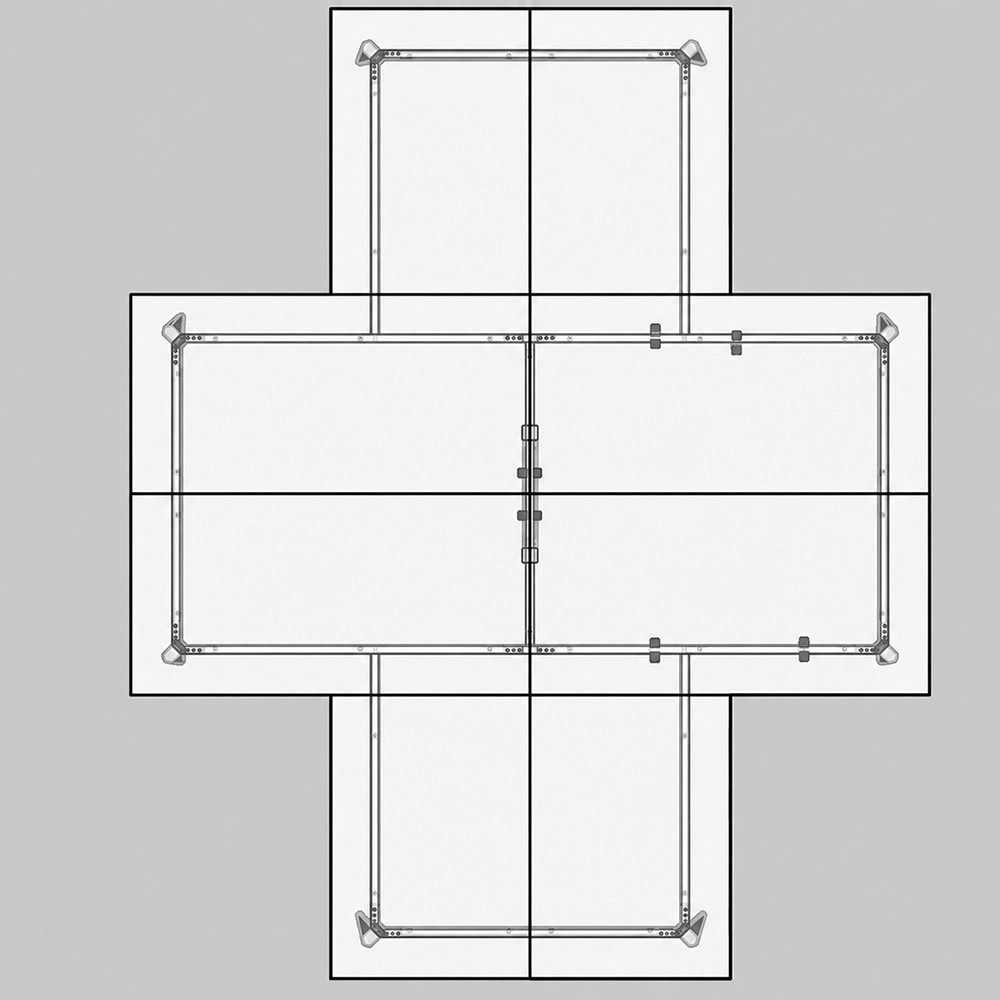
Tabletop Compatibility
What to Check Before Matching a Tabletop to a Frame
Tabletop compatibility depends on the tabletop dimensions and the selected frame model. Even when tabletops are the same size, different frame models may have different structural dimensions.
01
Table frame or table base
Series and model, if known.
02
Tabletop size
Finished length × depth.
03
Tabletop thickness
Finished thickness.
04
Tabletop material
Particleboard (PB), medium-density fiberboard (MDF), plywood, or solid wood.
05
Project details
If you are purchasing the table frame only, please provide the tabletop dimensions.
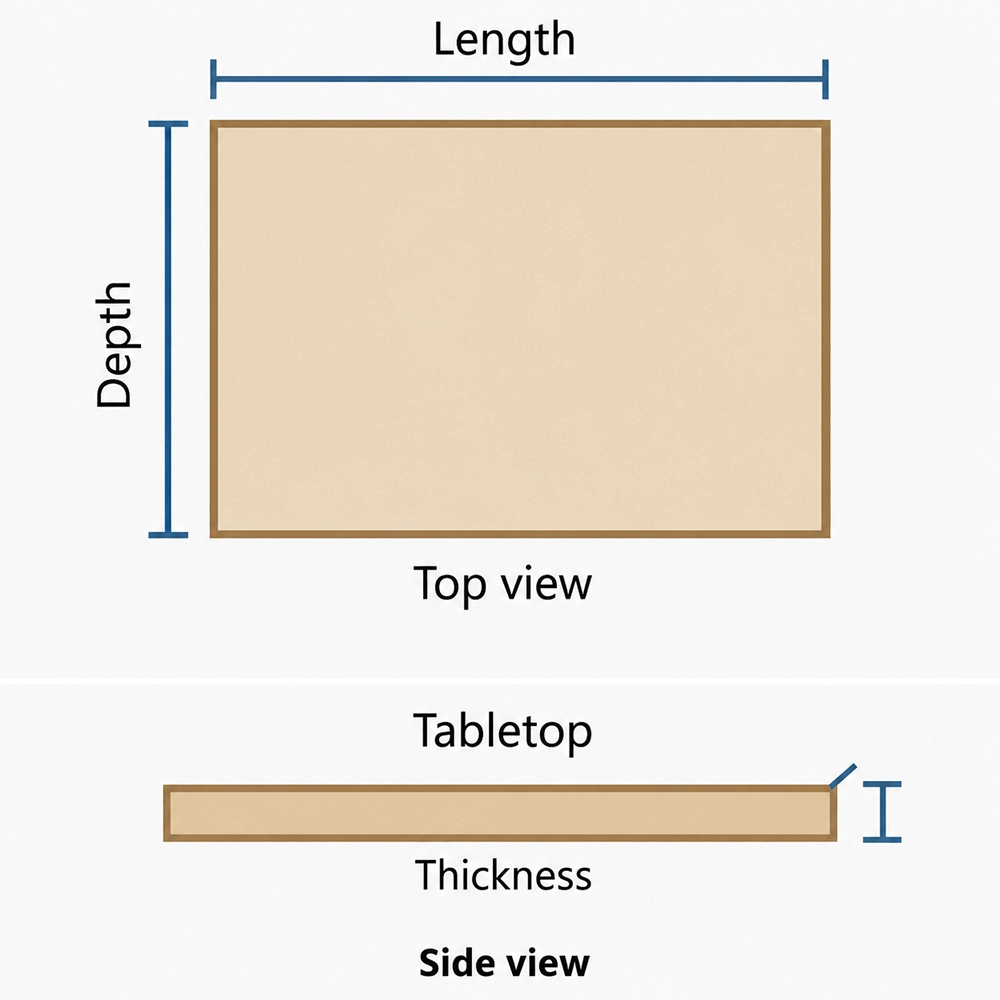
How Is the Tabletop Attached to the Frame?
Depending on the model, our desk frames primarily use one of two mounting methods.
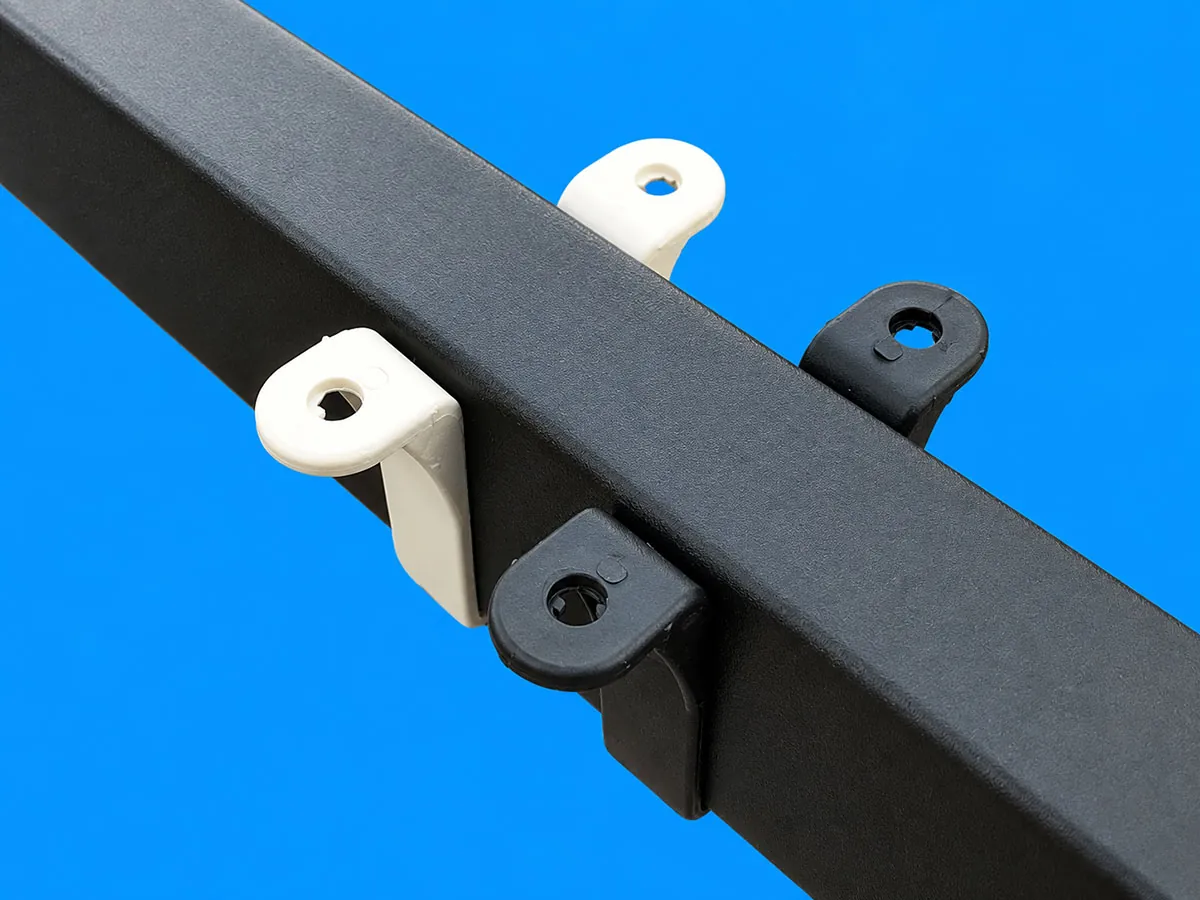
METHOD 01
Connector / Bracket Mounting
U-shaped connectors or mounting brackets create a secure connection between the tabletop and the frame.
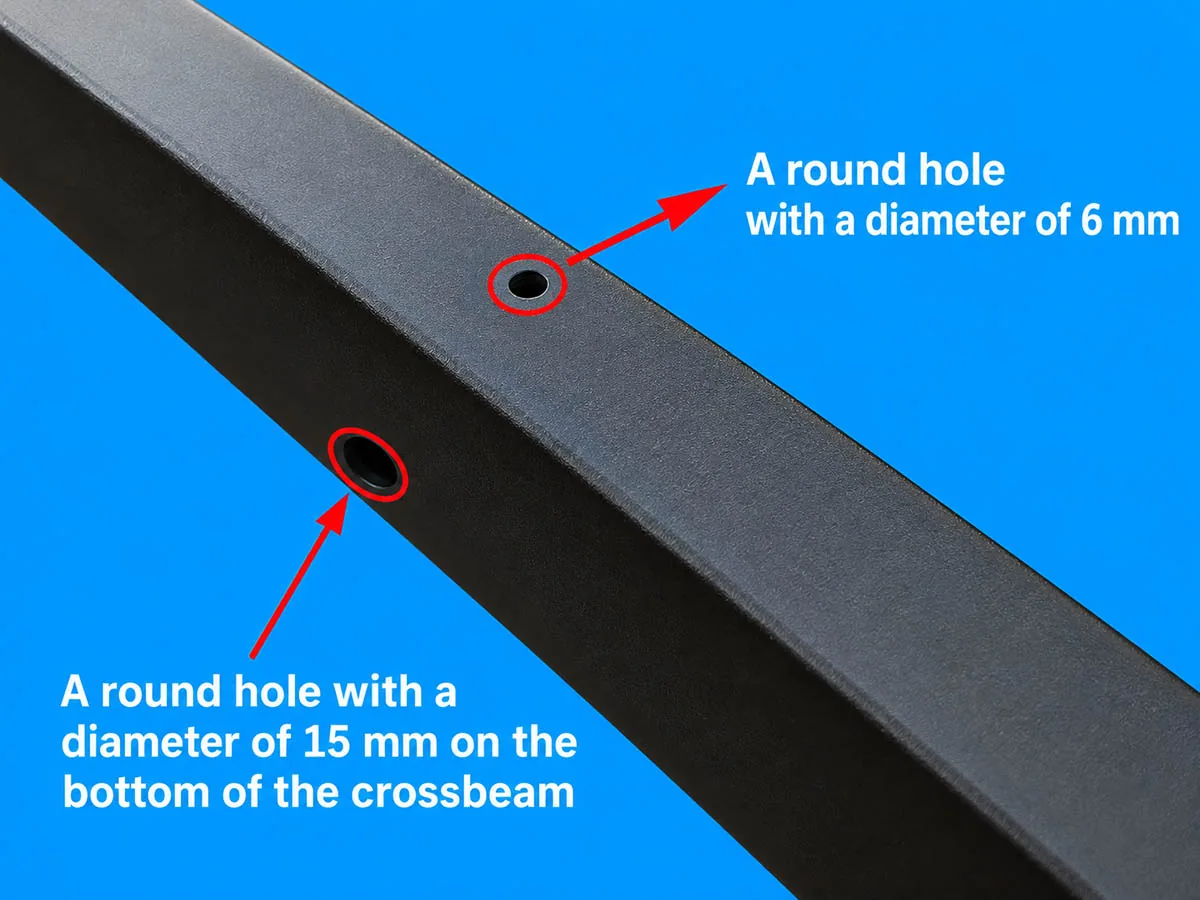
METHOD 02
Direct Beam Mounting
Screws pass through the mounting holes in the frame crossbeam to secure the tabletop to the frame.
Frame Positioning & Tabletop Overhang
How Should the Frame Be Positioned Under the Tabletop?
The mounting position of the frame depends on the crossbeam position of the selected model and the tabletop dimensions.
Tabletop & Frame Center
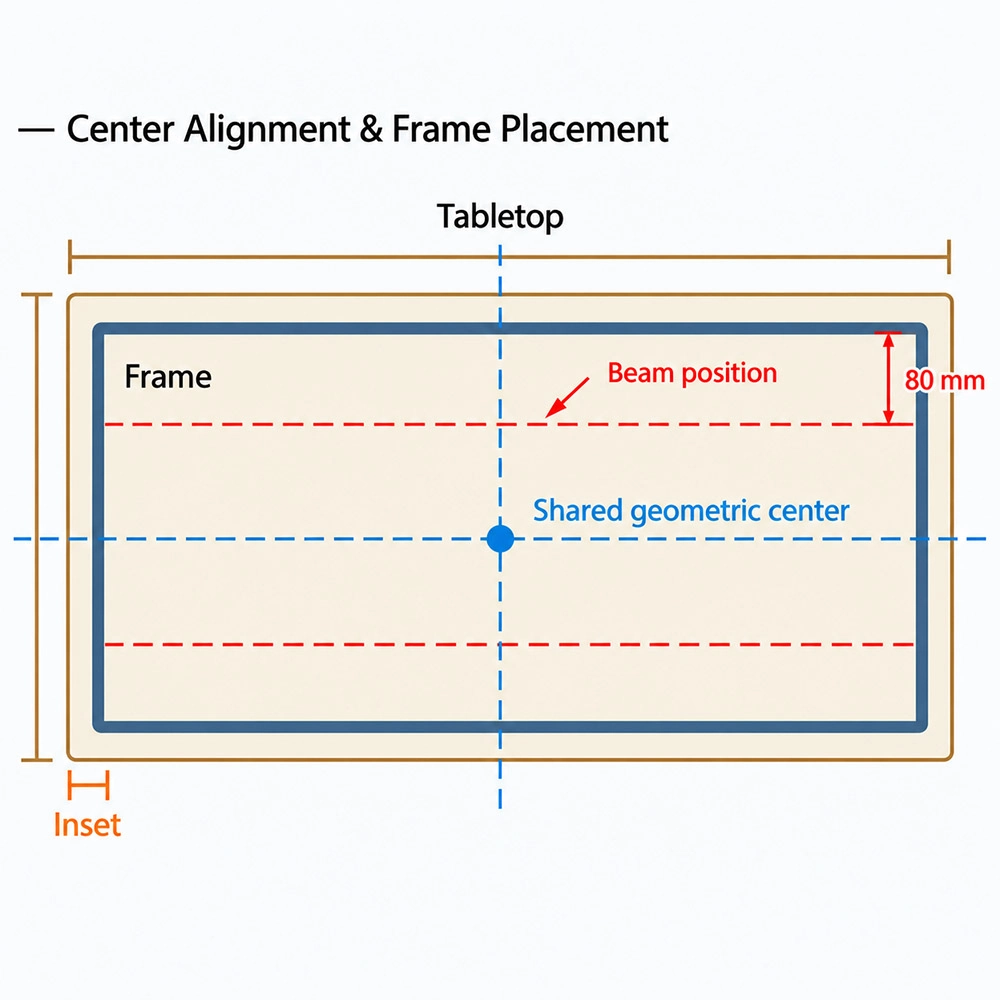
The tabletop and frame are aligned at their geometric centers to set the distances between the frame and the tabletop edges.
Leg or Base Position
U-shaped, loop-leg, and slant-leg frames are positioned at different distances from the tabletop edges.
For U-shaped and loop-leg frames, the tabletop typically extends 5 mm beyond the frame on all four sides. For slant-leg frames, the edge inset varies by model and leg design.
Edge Inset
The distance from the tabletop edge to the leg or base depends on the selected frame model and leg type.
Tabletop Overhang
Check how far the tabletop extends beyond the frame or supporting legs on each side.
General Dimensions & Model-Specific Notes
Do General Tabletop Dimensions Define Compatibility Limits?
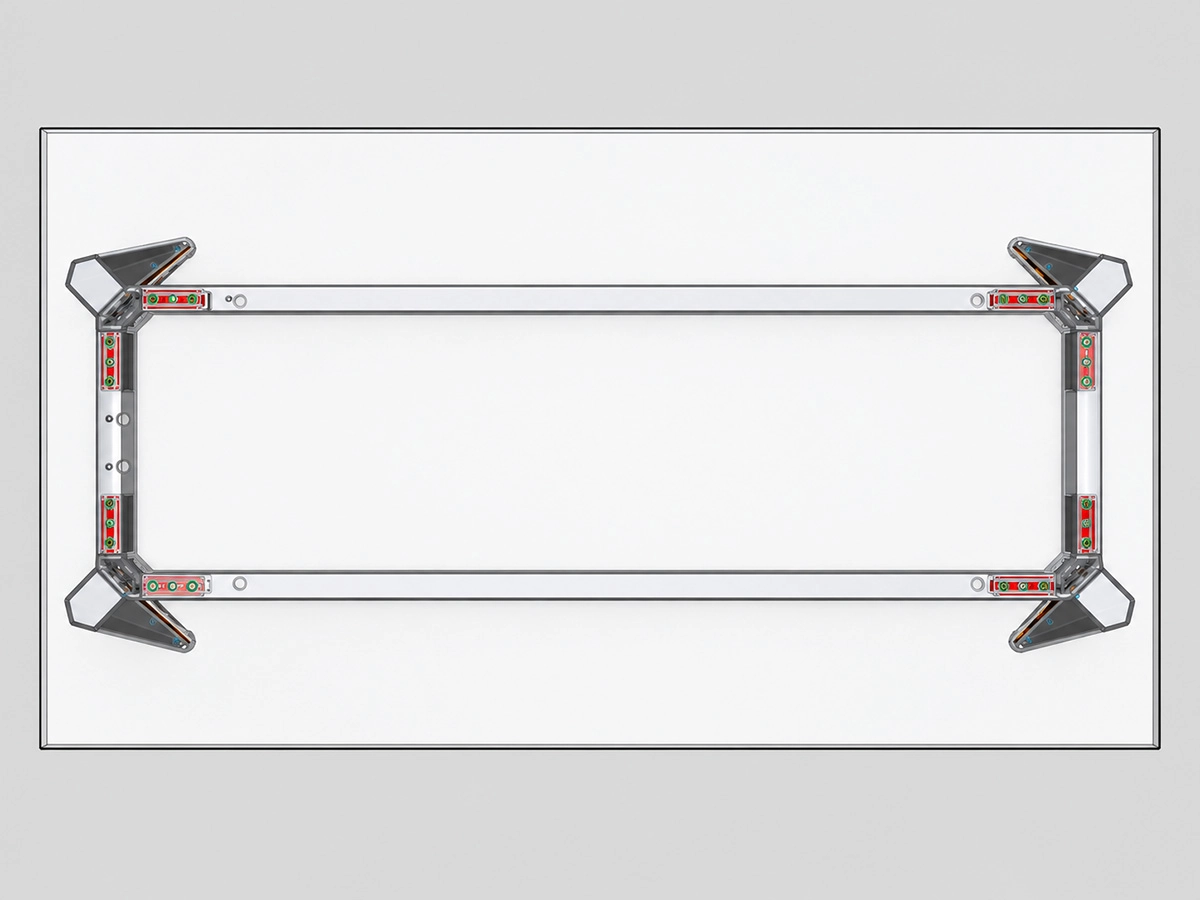
The frame position depends on the crossbeam location of the selected frame and the tabletop dimensions.
General Tabletop References
These common tabletop dimensions support initial frame planning. They do not guarantee compatibility with every frame model.
Length 1200–2000 mm
Depth 600–800 mm
Standard thickness 25 mm
These values are reference dimensions only. Confirm the selected model before finalizing the tabletop.
Compatibility Verification
What Should Be Checked Before Confirming Compatibility?
Tabletop and frame compatibility is reviewed using product drawings and mounting checks for the selected configuration.
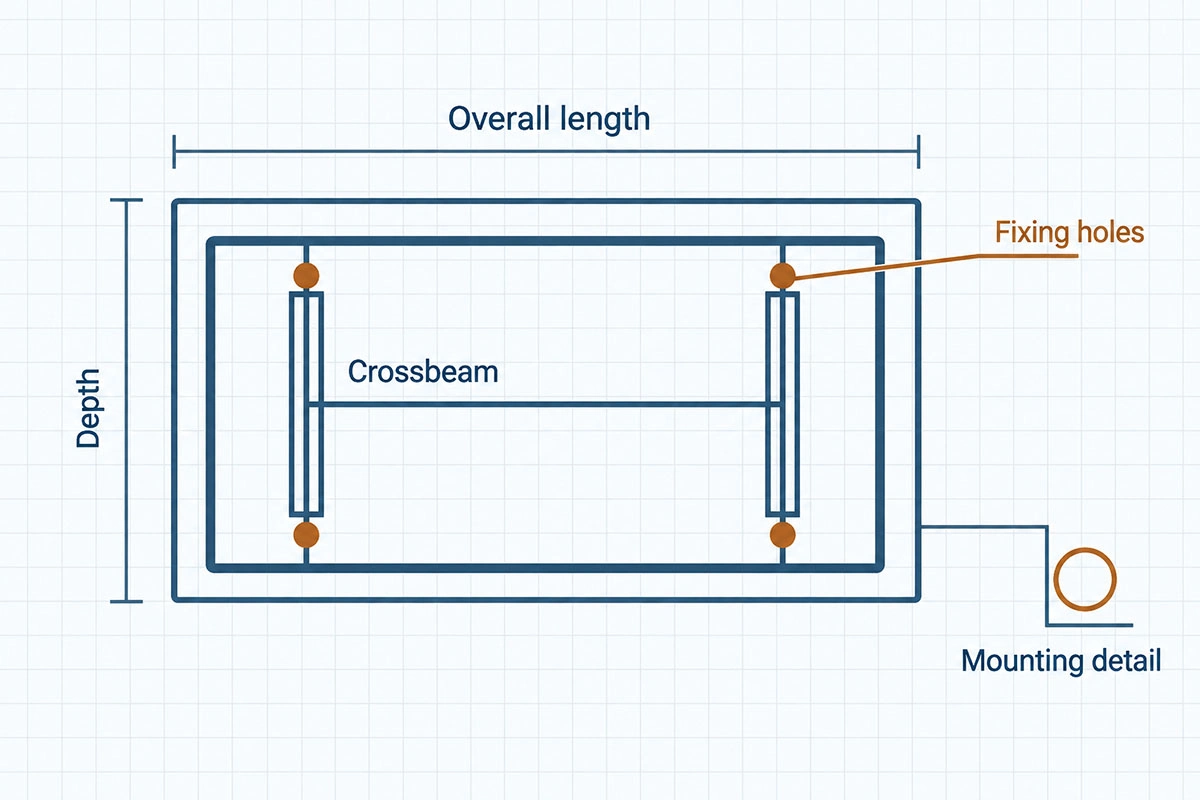
01 CAD & Mounting Drawings
Check the overall dimensions, mounting-hole positions, and connection details in the relevant technical drawings.
03 Mounting-Hole Check
Confirm that the fixing positions are suitable for the selected frame structure and tabletop mounting requirements.
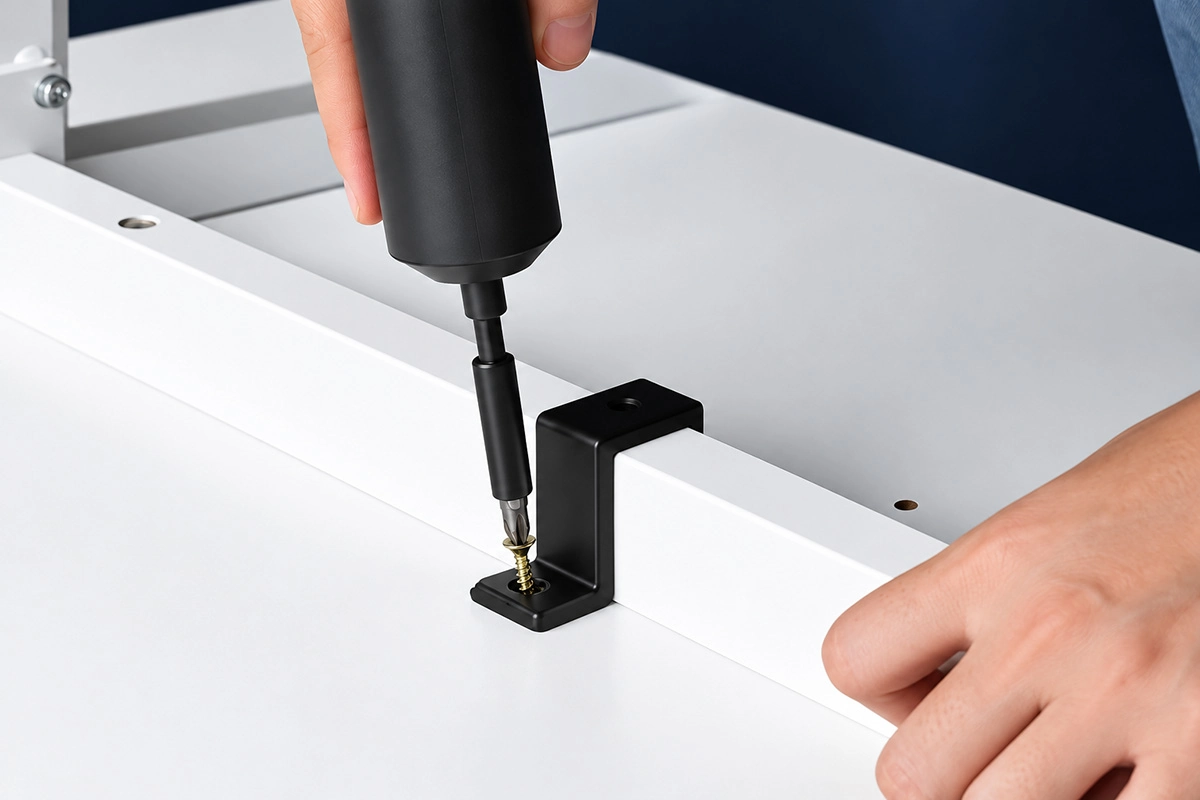
02 Trial Assembly
Trial assembly allows the tabletop-to-frame fit and mounting arrangement to be checked using the selected components.
04 Drawing & Model Match
Check that the drawings match the selected frame model and configuration.
Drawings and mounting checks help verify compatibility for a specific tabletop and frame combination. Details confirmed for one configuration may not apply to another.
Request a Compatibility Review
What Information Should I Provide?
To check whether your tabletop and desk frame are compatible, please provide the following information.
01 Frame or Base
Series, model, and configuration, if known.
02 Tabletop Specifications
Length, depth, and thickness, if available.
03 Project Requirements
Intended use and any special project requirements.
04 Technical References
Tabletop drawings, specifications, photos, or other relevant documents, if available.
05 Mounting Information
If desk screens, metal trunking, or other accessories are supplied by third parties, please provide the relevant CAD drawings. We will check whether the accessories are compatible with the desk frame and whether they may interfere with installation.